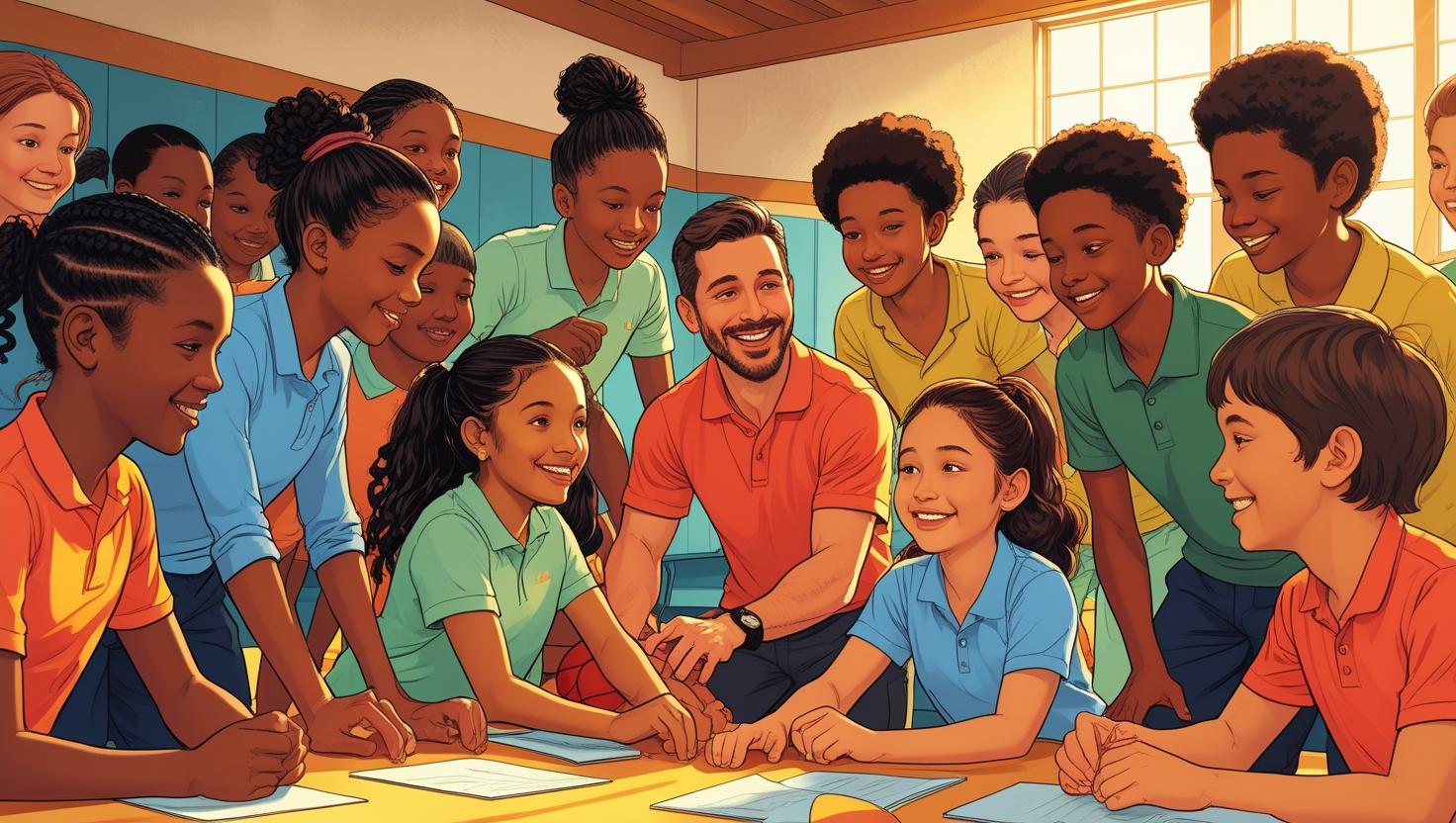
Every year, I get asked a familiar question: “How did you get “that student” to participate, to engage, to be respectful?”
The answer was never a secret. It was simple.
I built a relationship.
Not a surface-level connection, but a real, authentic one rooted in respect, patience, and consistency. I learned their name. I learned their story. I learned what motivated them. And when the tough moments came, as they always do in physical education, I had already earned the trust that allowed us to work through it.
Fair. Consistent. Predictable.
These three words are the pillars of effective classroom management, especially in physical education where movement, space, and energy levels can create chaos without structure. Fairness means all students are treated with equity and dignity. Consistency creates safety and trust. Predictability helps students feel secure and focused.
“Your consistency is someone else’s stability. Show up, stay steady, and keep planting the seeds, even when you don’t see the growth yet.”
#DailyEducatorWisdom, March 24th
The Power of Intentional Relationships
While cooperative games and get-to-know-you activities are a great way to start the year, and I’ve seen many great ones shared on X and Facebook recently, they are not enough. Icebreakers matter. But icebreakers do not replace intentional relationships.
The relationships you build early on become the bridge that carries your students through hard days, rough weeks, and emotional moments. When a student wants to shut down or sit out, your relationship gives you a way in. When a student knows you see them, they are more likely to listen, even when they do not want to.
“Every student is one trusted adult away from a breakthrough. Be the one who listens, believes, and shows up, especially when it’s hard.”
#DailyEducatorWisdom, March 22nd
Behavior Is Communication
One of the most important lessons I’ve learned is this: Every behavior has a reason. There is always something behind it.
Students do not act out for fun. They act out because they are frustrated, misunderstood, anxious, unseen, or simply trying to protect themselves. When we pause and dig deeper, we often find pain, fear, or unmet needs underneath the surface.
“Every behavior is a form of communication. Before reacting, get curious. What need might be hiding behind the action?”
#DailyEducatorWisdom, May 12th
Instead of saying that student is disrespectful, ask why are they showing up this way today. When relationships are strong, students let you in. And once you are in, that is when real growth can happen.
Beginning of Year Advice
Here are a few things I’ve learned to prioritize during the first weeks of school:
• Greet students by name and make time for individual connections
• Teach routines with clarity, practice them with purpose, and revisit often
• Follow through on every expectation with fairness, consistency, and care
• When students struggle, stay curious instead of frustrated
• Model calm, respect, and high standards, even when it is hard
“Students thrive on structure, not control. Clear expectations create freedom, not restriction.”
#DailyEducatorWisdom, May 3rd
“The strongest classrooms are built on trust, not compliance.”
#DailyEducatorWisdom, May 11th
Final Thought
This year, focus less on getting students to follow rules and more on getting students to follow you. Because they trust you. Because they feel safe with you. Because they know you care.
Your greatest classroom tool is your relationship with your students!
I would love to hear your thoughts:
What is your go-to strategy for building relationships with students in the first few weeks?
What advice would you give to a new teacher about classroom culture?
Comment below and share your wisdom.
Leave a Reply